Skip to content

WhiteLight Design

WhiteLight Design Goat Art Icon

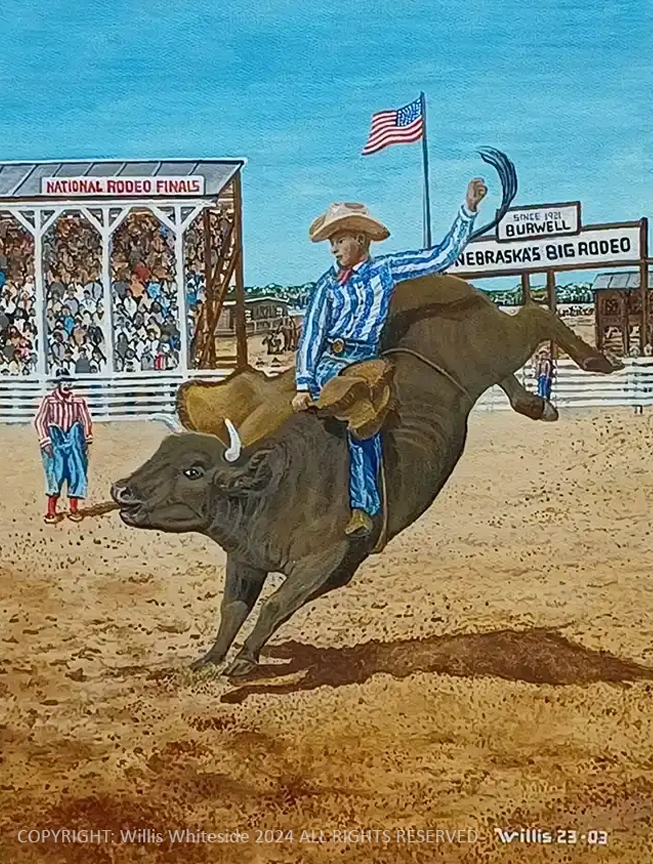
GOAT Rodeo - Jim Shoulders

RODEO

James (Jim) A. Shoulders

1928–2007 (aged 79)

Henryetta, Oklahoma

American professional rodeo cowboy and rancher.

Rodeo Career and Recognition

Pro Rodeo Hall of Fame.

At the time of his death, Shoulders was one of the most successful contestants in the Professional Rodeo Cowboys Association (PRCA).

Throughout his career, he won 16 World Championships.

Known as the “Babe Ruth of rodeo.”

In 1943, at age 14, he won his first bull riding competition in Oilton, Oklahoma, earning $18.

He continued riding until age 42.

Tornado and Rodeo Contributions

At age three, Shoulders purchased the famous bucking “wether” bull, Tornado.

Over 14 years, Tornado threw 200 riders.

Shoulders also contributed to the design of Wrangler Jeans 13MWZ “cowboy cut” jeans.

Additionally, he appeared in promotional advertisements for Ford, Dodge, Miller Lite beer, and Justin Boots.

As a ProRodeo stock contractor, he started the first rodeo training school.

He also invented the mechanical bucking machine.

Giddy Up!!!… w2

World Championship Titles

1949, 1956, 1957, 1958, 1959 — World All-Around Champion Cowboy Championships.

1951, 1954 to 1959 — World Bull Rider Championships.

1950, 1956 to 1958 — World Bareback Bronc Rider Championships.

1959 — 16 world championships, ranking third all-time with 16 titles.

National Finals Rodeo Achievement

First to win all three events (bareback bronc, bull riding, and all-around) at the National Finals Rodeo (NFR).

w2 Giddy Up!

Copyright: Willis Whiteside 2023. All Rights Reserved.

Back to the GOAT Art Gallery

REFERENCES: https://en.wikipedia.org/wiki/Jim_Shoulders

GOAT Sports Art by w2 Rodeo Jim Shoulders

Artistic Perspective

The Greatest of All Time art is a passion for bringing historical sports or public figures to life in full color.

First, the artistic process begins with researching the personality and reviewing available images or photographs for reference. In addition, historical locations and fans filling bleacher seats to witness memorable moments are part of the research.

Next, contrasting colored pencils outline the primary figures or elements on the 18″ × 24″ canvas. As a result, these lines establish color boundaries, distinguish edges, and sfumato effects with smoky edges, light shading, or blending.

Usually, the foreground remains in focus, featuring the subject in dynamic action. Furthermore, careful attention is given to anatomical positions, as these are sometimes the most recognized images or captured photographic moments of the subject.

Whether crossing the finish line or hurling a fastball, the intent is to create movement. Consequently, the viewer’s eye follows the subject while exploring the details.

Applying Color

First, mixed acrylic paint is squeezed from a tube and applied, with a drying time of 10–20 minutes. Additionally, applying and blending colors depends on color and water saturation.

Generally, base colors are applied from dark to light. Afterward, the base layers absorb new wet paint, allowing two or three colors to blend and achieve the desired results.

Applying multiple layers increases color intensity and saturation. Furthermore, white, pure colors, and darker shades create the desired blending effects.

From blank canvas to final brushstroke, the process normally takes two to three weeks. During this time, painting sessions typically last two to four hours, usually in the early morning.

Ultimately, we hope you enjoy the art as intended, bringing back the best of the sport!

Have a suggestion for a new GOAT? If so, please contact us.